
Mudrooms, Storage, and Real Life at Home
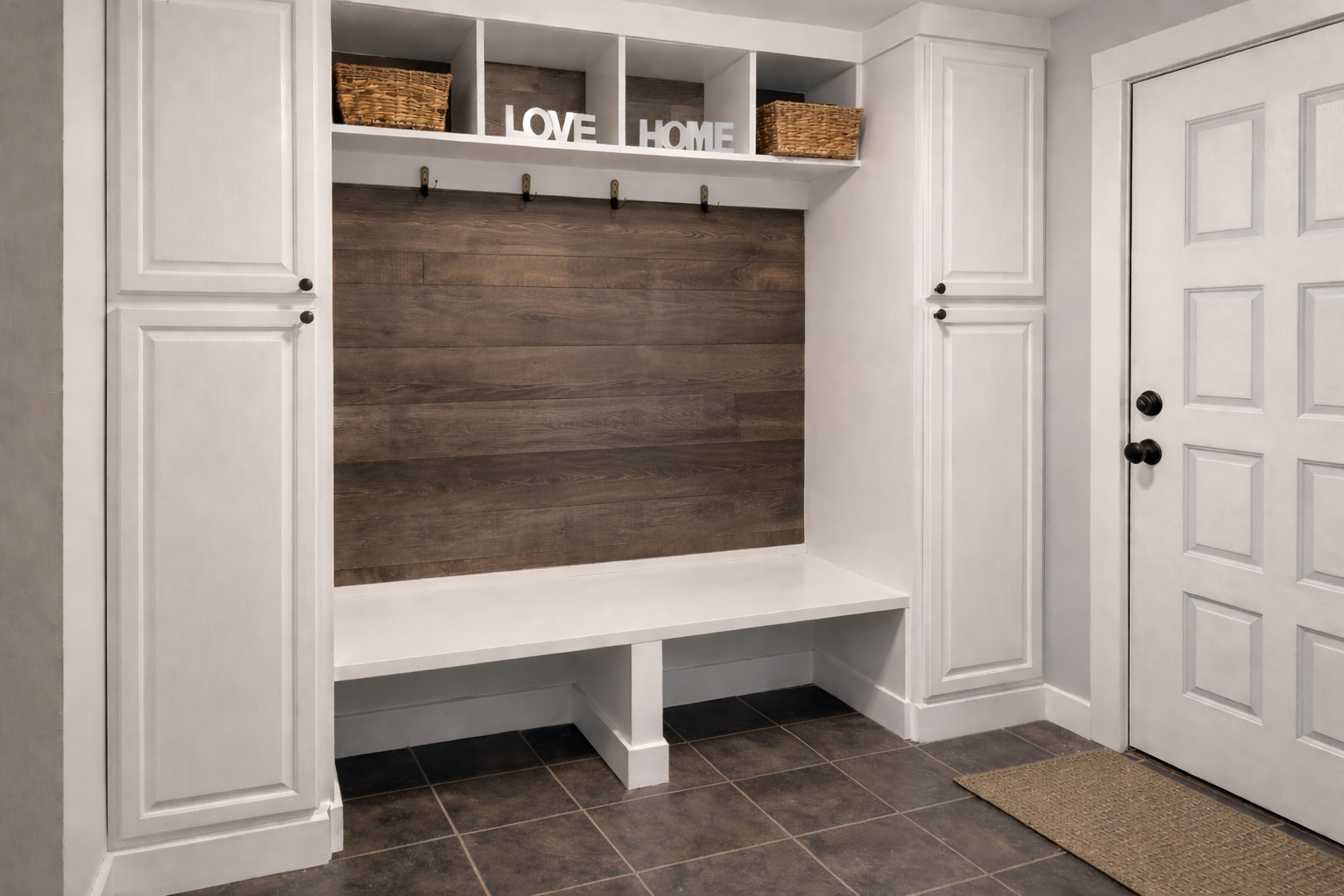
Mudrooms are often overlooked when planning a remodel.
But in real life, they are one of the most important spaces in the home.
Between shoes, coats, backpacks, sports gear, and daily traffic in and out, things come inside quickly. Without a dedicated space to manage it, clutter builds fast.
In climates like Northern Vermont, where weather plays a role for much of the year, having a functional entry space becomes even more important.
A well-designed mudroom brings order to everyday life.
Start With How Your Family Uses the Space
Before thinking about finishes or layout details, start with daily habits.
Ask:
Which door is used most often
Where do shoes currently pile up
Where do coats and bags end up
How many people are moving through the space at once
The most effective mudrooms are built around real routines, not ideal scenarios.
Give Everything a Place
A functional mudroom is built on organization.
Consider including:
Individual hooks for each family member
Cubbies or lockers for bags and gear
Closed storage for less-used items
A bench for sitting and removing shoes
When each item has a clear place, the space stays easier to maintain.
Plan for Daily Wear and Changing Conditions
Entry spaces handle more wear than almost any other part of the home.
Think about:
Wet shoes and boots
Dirt, snow, and everyday mess
Durable flooring that is easy to clean
Surfaces that can handle frequent use
In regions with long winters or seasonal changes, these details make a noticeable difference.
Storage That Adapts Over Time
Families change, and so do their needs.
Small coats turn into larger gear
Backpacks turn into sports bags
Schedules become busier
Designing flexible storage allows the space to evolve. Adjustable shelving, open cubbies, and multipurpose storage help extend the life of the space.
Keep It Connected to the Home
A mudroom should feel integrated, not separate.
Good design considers:
Flow into the kitchen or main living space
Access to laundry if possible
Clear pathways that prevent congestion
When the mudroom connects naturally to the rest of the home, it supports daily routines more effectively.
Small Spaces Can Work Well
Not every home has space for a large mudroom. Even a smaller entry area can function well with:
Wall-mounted hooks
Compact bench seating
Vertical storage solutions
A thoughtful layout
It is not about how much space you have. It is about how you use it.
Final Thoughts
Mudrooms are one of the hardest working spaces in a home.
When designed well, they help keep clutter contained, support daily routines, and make the rest of the home feel more calm and organized.
It is a simple space that can make a lasting impact.
Thinking About Remodeling in Northern Vermont?
If you are considering improving your entry space or adding a mudroom, we are glad to help you think through layout, storage, and materials that will hold up over time.
Thoughtful planning leads to homes that truly work!